
What Actually Makes a Team Worth Belonging To
Belonging is built through being known, feeling safe, and being supported in difficult moments—not simply through perks or inclusion.

Opening note
Welcome back to The Culture Shift.
Last week we talked about the high cost of choosing the wrong person for a team. This week I want to explore the other side of that same coin. Because once you understand what the wrong person costs you, the natural question becomes what actually makes a team worth being part of in the first place.
That question matters more than most leaders realize.
This week
Most organizations trying to improve how people feel at work reach for the same things. Better perks. Nicer offices. A new benefit. A culture committee. An event.
None of these are bad. But almost none of them create the thing they are actually reaching for, which is belonging.
Because belonging does not come from what an organization gives people. It comes from how people are treated by the humans they work with every day, especially the person leading them.
I have watched organizations with extraordinary perks where people still felt like outsiders. And I have watched modest organizations with almost no budget where people felt so genuinely part of something that they turned down better paying offers to stay. The difference was never the perks. It was whether people belonged.
Belonging Is About Being Known, Not Just Included
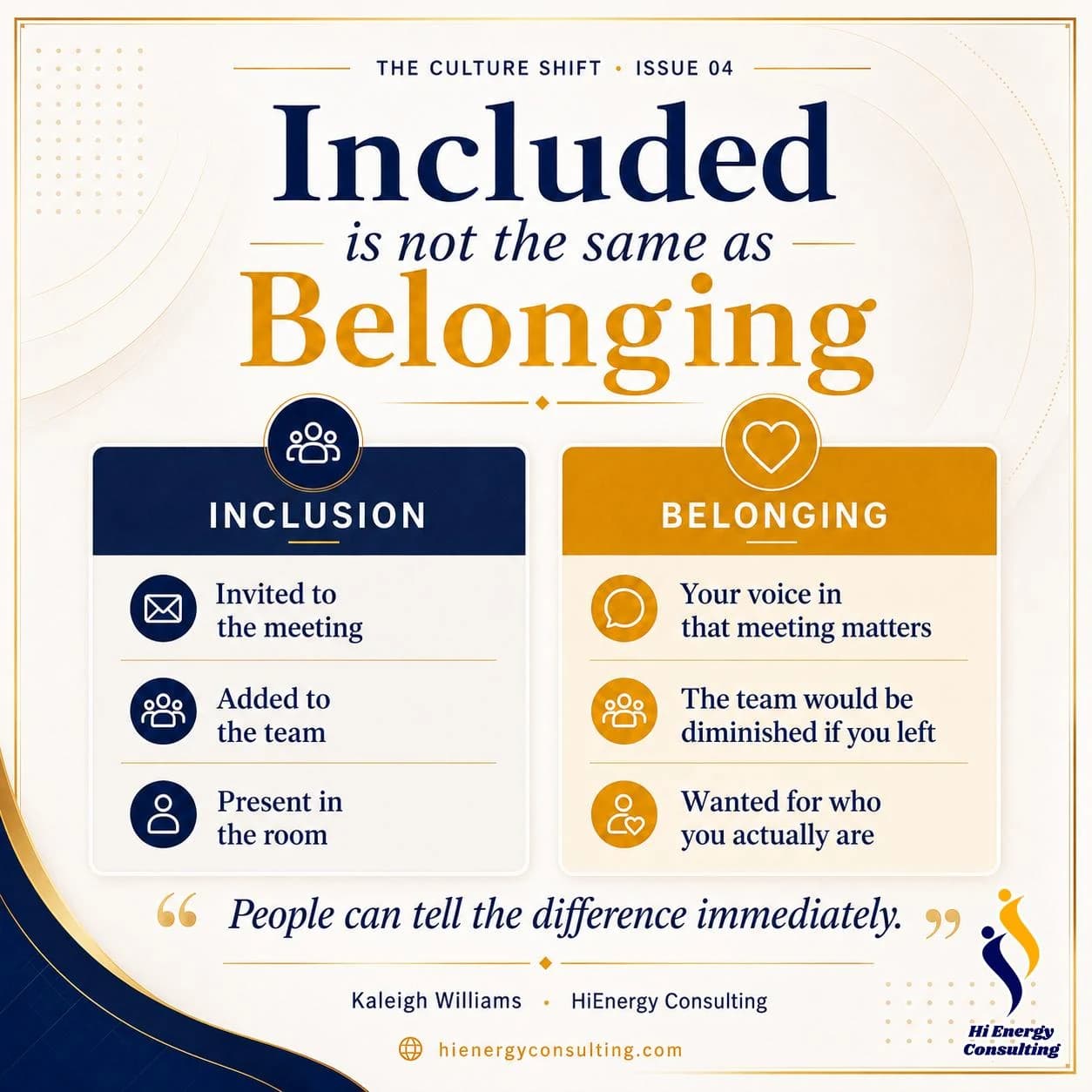
There is a meaningful difference between being included and belonging, and most organizations stop at inclusion.
Inclusion is being invited to the meeting. Belonging is feeling that your voice in that meeting actually matters. Inclusion is being added to the team. Belonging is feeling that the team would be genuinely diminished if you left.
People can tell the difference immediately. You can include someone in everything and still leave them feeling like a guest who could be replaced at any moment. Real belonging requires something deeper. It requires people to feel known, valued for what is specific about them, and genuinely wanted for who they are rather than simply needed for what they produce.
That kind of belonging is built by leaders who take the time to actually know their people. What they are good at. What they care about. What they are working toward. What makes their contribution distinct. You cannot make someone feel valued for who they are if you have never taken the time to learn who they are.
Belonging Requires Safety
People only truly belong somewhere they feel safe. Safe to speak up. Safe to disagree. Safe to admit a mistake or ask for help without it being quietly held against them.
When that safety is missing, people perform belonging without actually feeling it. They smile in the meetings and guard themselves the rest of the time. They contribute what is expected and hold back what is real. And the organization never gets their best, because their best requires a level of safety they have not been given.
This is why belonging and psychological safety are inseparable. You cannot have one without the other. A team where it is not safe to be honest is a team where no one fully belongs, no matter how friendly it looks on the surface.
Belonging Is Built in How You Handle the Hard Moments
Here is what surprises many leaders. Belonging is not built mainly in the good times. It is built in how a team handles the difficult ones.
When someone makes a significant mistake, does the team close ranks around them or quietly distance themselves. When someone goes through something hard in their personal life, does the team make room for their humanity or expect them to leave it at the door. When someone disagrees with the direction, are they still fully part of the team afterward or subtly pushed to the edge.
These moments are where people learn whether their belonging is conditional. And belonging that is conditional is not really belonging at all. It is a performance review disguised as a relationship. The teams where people most deeply belong are the ones where people have learned, through experience, that they will not be abandoned the moment they are imperfect.
Why This Matters
A team where people genuinely belong outperforms a team where they do not, every single time. People who belong bring their full selves, their best thinking, their discretionary effort, and their loyalty. People who do not belong bring a careful, guarded, partial version of themselves, and the organization never even knows what it is missing.
Building that kind of belonging is not about perks or programs. It is about leadership. About leaders who know their people, create real safety, and prove in the hard moments that belonging here is not conditional.
That is the work I do at HiEnergy Consulting. Helping leaders build teams that people are genuinely proud to be part of, and reluctant to leave.
If building that kind of team is something you are working toward, I would genuinely love to have that conversation.

Kaleigh Williams
President and CEO, HiEnergy Consulting. HR strategist and organizational development consultant.